
AI chatbots are automated communication tools powered by artificial intelligence and natural language processing that simulate human conversation. They improve customer service and lead generation by providing instant, 24/7 support, automating lead qualification, and personalizing user interactions, which ultimately streamlines the sales funnel and enhances overall business efficiency in the digital space.

The landscape of digital interaction is shifting rapidly. As consumer expectations for instantaneous responses grow, traditional methods of communication like email forms and delayed phone support are becoming obsolete. Businesses that fail to adapt to this shift risk losing potential clients to competitors who offer faster, more interactive solutions. Integrating artificial intelligence into these touchpoints is no longer a luxury but a strategic necessity for brands in the AI, marketing, and SEO niches.
The Evolution of Customer Interaction and Conversational Marketing
Historically, customer interaction was a linear and often slow process. A customer would find a website, browse the content, and if they had a question, they would fill out a contact form. This form would go into a CRM or an inbox, and a human agent would respond within 24 to 48 hours. In today’s high-speed economy, 48 hours is an eternity. According to Wikipedia, a chatbot is a software application used to conduct an on-line chat conversation via text or text-to-speech, providing a direct alternative to these static interactions.
Conversational marketing has emerged as the solution to this friction. By utilizing AI chatbots, businesses can engage users the moment they land on a page. This isn’t just about answering questions; it’s about guiding the user journey. When a visitor feels heard and assisted immediately, their trust in the brand increases. This transition from passive content consumption to active conversation is a cornerstone of modern digital success. Understanding how these tools fit into a broader roadmap is essential for any growing enterprise, similar to understanding the fundamentals of digital marketing where user experience is prioritized.
Moreover, the technological advancements in Natural Language Processing (NLP) have allowed these bots to understand intent, sentiment, and context. They are no longer the rigid, rule-based systems of the past that would break if a user made a typo. Modern AI models can handle complex queries, making the interaction feel more human and less transactional.
Revolutionizing Customer Service through Intelligent Automation
Customer service is the frontline of brand reputation. A single bad experience can lead to a public negative review, while a stellar interaction can create a lifelong advocate. AI chatbots offer several layers of improvement for service departments:
1. **Constant Availability**: Unlike human teams, AI does not sleep. It provides 24/7 coverage, ensuring that international customers or late-night browsers receive the same level of attention as those contacting during business hours.
2. **Scalability**: During a product launch or a seasonal sale, traffic can spike. A human team would be overwhelmed, leading to long wait times. AI chatbots can handle thousands of simultaneous conversations without any degradation in performance.
3. **Consistency**: Humans have off-days; AI does not. A bot will always deliver the correct information, adhere to brand voice guidelines, and follow company policy without deviation.
4. **First-Response Resolution**: Many customer queries are repetitive, such as “Where is my order?” or “What are your hours?”. AI can resolve these instantly, freeing up human agents to handle complex, high-empathy situations that require a personal touch.
By automating the mundane, companies can lower their operational costs significantly. Research by Gartner predicts that chatbots will become the primary customer service channel for a quarter of organizations within the next few years. This shift allows for a more strategic allocation of human resources, focusing on creative problem-solving rather than rote information retrieval.
Driving Lead Generation and Conversion Rates
Lead generation is the lifeblood of marketing. Traditionally, this involved capturing emails through whitepapers or newsletters. While effective, these methods are often passive. AI chatbots transform lead generation into an active, engaging process. Instead of asking a user to fill out a 10-field form, a bot can ask those questions one by one in a conversational format.
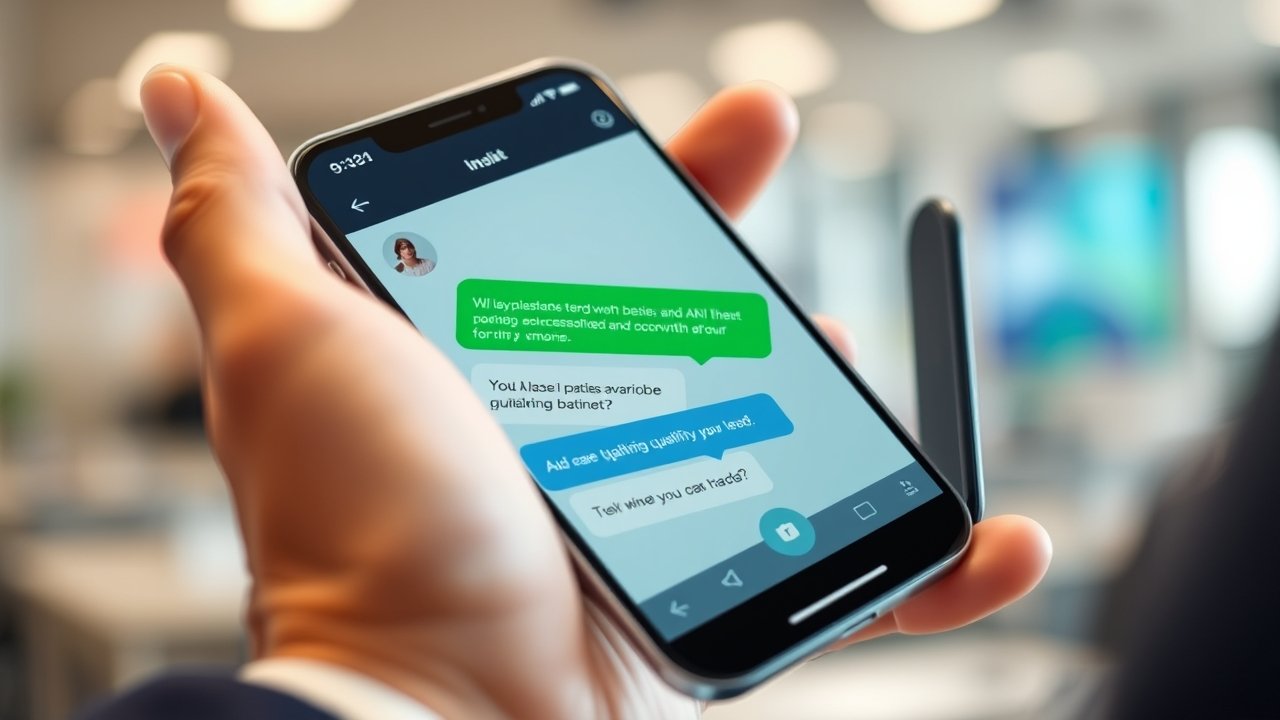
The psychological barrier to answering a quick question in a chat bubble is much lower than committing to a form. This conversational approach allows for real-time lead qualification. For instance, a bot can ask a visitor about their budget, company size, and specific needs. If the visitor meets the criteria for a “hot lead,” the bot can immediately offer to schedule a call or even transfer the chat to a live salesperson. This immediacy prevents lead decay—the phenomenon where the likelihood of closing a deal drops drastically as time passes from the initial inquiry.
In the context of SEO, these bots keep users on the page longer. Increased dwell time and reduced bounce rates are positive signals to search engines. When you implement 7 explosive seo hacks to skyrocket your traffic, the goal is not just to get people to the site, but to keep them there. An engaging chatbot is a powerful tool for retention. It provides value the moment the user arrives, making the site a destination rather than just a landing page.
Furthermore, AI bots can perform “nurturing” on the fly. If a user is hesitant, the bot can provide case studies, link to relevant blog posts, or offer a limited-time discount code based on the user’s behavior. This level of dynamic response is impossible to achieve with static website elements.
The Intersection of AI, UX, and Technical Integration
Implementing AI chatbots requires a blend of marketing strategy and technical execution. It is not enough to just install a plugin; the bot must be trained on high-quality data. For many businesses, there are ai for marketers practical ways to use ai without being an expert that simplify this process. Many platforms now offer “no-code” builders where you can map out conversation flows visually.
From a technical SEO perspective, the implementation must be lightweight. A chatbot script that slows down a website’s load time can hurt search rankings and frustrate users. It is crucial to ensure that the bot is optimized for mobile devices, as a significant portion of traffic now comes from smartphones. The interface should be intuitive, non-intrusive, and easy to dismiss if the user is not interested.
Integration with your existing CRM (Customer Relationship Management) system is also vital. When a chatbot captures a lead, that data should flow seamlessly into your sales pipeline. This allows your team to have a full history of the interaction before they even pick up the phone. This synergy between AI-driven data collection and human-driven sales is where the highest conversion rates are found.

Comparing Chatbot Technologies for Your Business
Deciding which type of conversational tool to use depends on your specific goals and budget. Below is a comparison of the most common options available today:
| Feature | Static Contact Forms | Rule-Based Chatbots | AI-Powered Chatbots |
|---|---|---|---|
| Response Speed | Delayed (Hours/Days) | Instant | Instant |
| Understanding Intent | None | Very Limited | High (NLP) |
| Lead Qualification | Manual | Basic Branching | Advanced & Adaptive |
| Setup Difficulty | Low | Medium | Medium to High |
| User Satisfaction | Low | Moderate | High |
While static forms are the easiest to implement, they offer the lowest return on engagement. Rule-based bots are better but can be frustrating if a user asks a question outside the pre-defined script. AI chatbots represent the gold standard, offering a balance of automation and sophisticated understanding that mimics human interaction.
Best Practices for Deploying AI Chatbots
To maximize the impact of AI chatbots on your customer service and lead generation, follow these strategic guidelines:
1. **Define Clear Objectives**: Determine if the bot’s primary role is to answer support tickets, book meetings, or qualify leads. A focused bot is more effective than one trying to do everything at once.
2. **Human-in-the-Loop**: Always provide an easy way for a user to speak to a human. If the AI cannot resolve an issue, a seamless hand-off prevents user frustration.
3. **Brand Voice Alignment**: Customize the bot’s personality and tone to match your brand. A playful brand should have a conversational bot, while a law firm might require a more formal tone.
4. **Continuous Learning**: Review chat logs regularly. This helps identify where the bot might be struggling and allows you to update its knowledge base with more accurate information.
5. **Transparent Disclosure**: It is best practice to let users know they are speaking with an AI. Transparency builds trust and manages expectations regarding the bot’s capabilities.
Implementing these practices ensures that your chatbot serves as a value-add rather than a barrier. When users find value in the interaction, they are more likely to progress through your marketing funnel, turning from curious browsers into loyal customers.
Overcoming Common Challenges and Ethical Considerations
Despite their benefits, AI chatbots are not without challenges. One of the primary concerns is data privacy. Because these bots collect user information, they must comply with regulations like GDPR or CCPA. Ensuring that your chatbot platform is secure and that users are aware of how their data is used is paramount.
Another challenge is “hallucinations,” where an AI provides incorrect or fabricated information. This is why training on a closed knowledge base—where the bot only draws from your specific company documentation—is often safer than using a general-purpose AI. Regular testing and auditing of the bot’s responses can mitigate this risk.
Finally, there is the ethical consideration of job displacement. While AI does automate tasks, it should be viewed as an augmentative tool. By handling the high-volume, low-complexity tasks, AI allows human employees to focus on high-value work that requires creativity, empathy, and strategic thinking. This synergy creates a more productive and satisfying workplace for everyone involved.

Frequently Asked Questions
1. Can AI chatbots really replace human customer service agents?
They don’t replace humans but rather augment them. They handle repetitive queries so humans can focus on complex issues. A hybrid model is usually the most effective approach for modern businesses.
2. How do AI chatbots help with SEO?
They improve SEO by increasing user engagement, reducing bounce rates, and increasing time-on-site. These are positive UX signals that search engines use to rank websites higher.
3. Are AI chatbots expensive to implement?
The cost varies. There are affordable SaaS options for small businesses, while custom enterprise solutions can be more expensive. However, the ROI in terms of saved time and captured leads often outweighs the cost.
4. Do customers actually like talking to bots?
Yes, provided the bot is helpful and fast. Most customers prefer an instant answer from a bot over waiting hours for a human response.
Contact us
Ready to transform your business with cutting-edge AI technology? Our team specializes in integrating sophisticated AI chatbots into your digital strategy to drive growth and streamline support. Learn More about how we can help you scale your lead generation and customer service today.